The Dow Jones Industrial Average (DOW) is up 5% so far in 2026 after quite a tumultuous first four months. The DOW reached 50,000 in February 2026, only to retreat 10% to 45,166 in March 2026.
As the crisis in Iran unfolded, West Texas Intermediate “WTI” oil prices skyrocketed from $60/barrel to the recent high of $113/barrel. Gasoline prices rose by more than $1.00/gallon. Gasoline prices increase or decline by 0.20-0.25/gallon for every $10/barrel change of WTI. As the war continued, markets expressed concerns about economic growth and inflation by selling off. WTI has declined by 19% during the past month to the current $98, and the stock market is now back to the previous highs set back in February.
The Oil and Gas futures markets are pricing in a continuation of oil and gas price declines during the next six months.
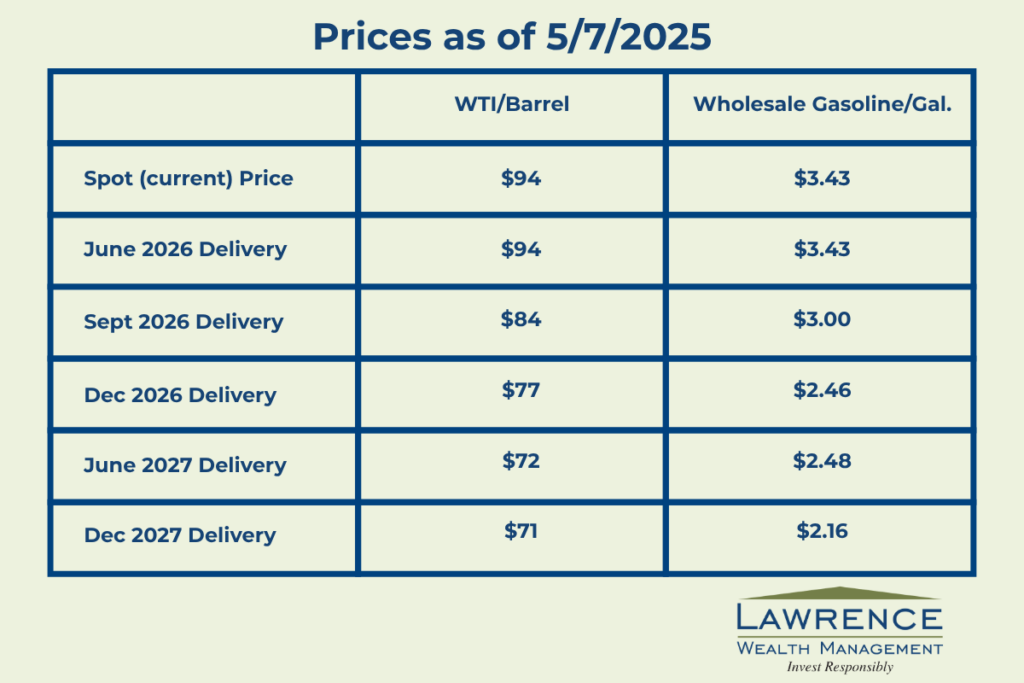
The Futures Markets: Buyers and sellers of commodities agree on a price for delivery in the future for specific commodities. There are both commercial users and speculators who buy and sell futures and thereby set prices for future delivery. Commercial users hedge future costs by using futures markets. For example, airline companies sell tickets for future travel and will buy jet fuel in the future at an agreed-upon price and delivery to lock in their fuel costs to match the timing of ticket sales. While jet fuel prices change, airlines can hedge against this risk by using the futures market to lock in future jet fuel costs to match future ticket revenue. Commercial users are buying or selling large quantities of commodities and tend to be well-informed participants.
In contrast, speculators buy or sell futures contracts to profit from expected changes in futures prices. These are high-risk investments that can result in high profits or losses.
Investors are back to focusing on corporate earnings as oil prices are on the retreat. Corporate earnings are expected to rise substantially during the next three years as the U.S. is in a productivity surge.
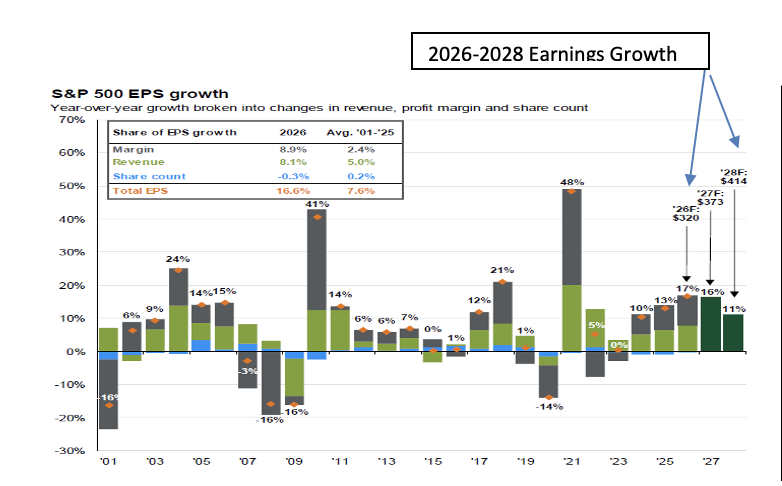
Valuation: price-to-earnings “P/E” ratio is high when compared to history. The S&P 500 Index’s current P/E ratio is 22x versus the 18x average. While this P/E ratio is high relative to history, corporate earnings are expected to expand 15-17% annually in the next three years, substantially greater than the 7-8% historical average.
Our opinion: the current P/E is justified, as long as forecasted earnings are delivered. Earnings estimates are based on corporate guidance, and then analysts and strategists post earnings estimates on various reporting platforms.
The current earnings reporting period indicates strong S&P 500 earnings growth.
- 63% of companies have reported Q1 2026 results.
- 91% exceeded analysts’ earnings estimates, greater than the 74% historical average.
- Companies are beating earnings estimates by an average of approximately 21%.
- 81% of companies are beating on revenue as well.
Market Risks
- Inflation rises into 2027, causing the Fed to raise interest rates
- Corporate Earnings estimates are reduced
- P/E compresses if #1 and/or #2 unfold
Rich Lawrence, CFA
Disclosure:
Opinions about the future are not predictions, guarantees, or forecasts. Investing in stock and bond markets has risks that could lead to investors losing money. We always advise investors to maintain a cushion of safety funds (cash, money market funds, and investment-grade bonds) to fund expenses for 2-4 years. Unforeseen events occur that can thrust the stock market down. The current Iran Crisis is a perfect example. Stocks are long-term investments and should not be used for short-term spending needs.